24-Hour Emergency Electrician in Gràcia: Faults and What to Do
If the RCD keeps tripping in your flat or business premises in Gràcia, there is a smell of burning or the sockets are hot, switch off what you can safely, do not touch the consumer unit or the cables, and call an authorised installer. Many buildings in the Vila de Gràcia still have installations designed for far lower consumption than today's, and that is where most faults come from. A 24-hour emergency service in Barcelona can find the cause and make the installation safe.
1. Why installations in Gràcia cause so many problems
Gràcia is a neighbourhood of old buildings, small flats, narrow staircases and renovations carried out in stages over decades. It is common to find installations where new sections sit alongside very old wiring, DIY joints and consumer units that have never been updated.
The underlying problem is that we use more electricity than we used to: oven, induction hob, air conditioning, washing machine, tumble dryer and home working all at the same time. An old installation usually has barely adequate cable sizes, few circuits and outdated protection. In addition, damp from light wells and ground-floor premises, together with the passage of time, degrades the insulation.
The Low Voltage Electrotechnical Regulation (REBT) and its ITC-BT technical instructions set out requirements for protection, circuits and earthing that many old installations do not meet.
2. Most common faults in flats, communities and business premises
These are the situations that come up most often in old buildings in Gràcia and in other areas of Barcelona and its metropolitan area:
- The ICP or main switch trips when several appliances are switched on at once: this usually points to an overload or insufficient contracted power.
- The RCD trips for no obvious reason: there may be a leak caused by damp, a faulty appliance or a deteriorated cable.
- Sockets or plugs that get hot, discolour or give off a smell of burnt plastic.
- Lights that flicker or change in brightness: this suggests loose connections or joints in poor condition.
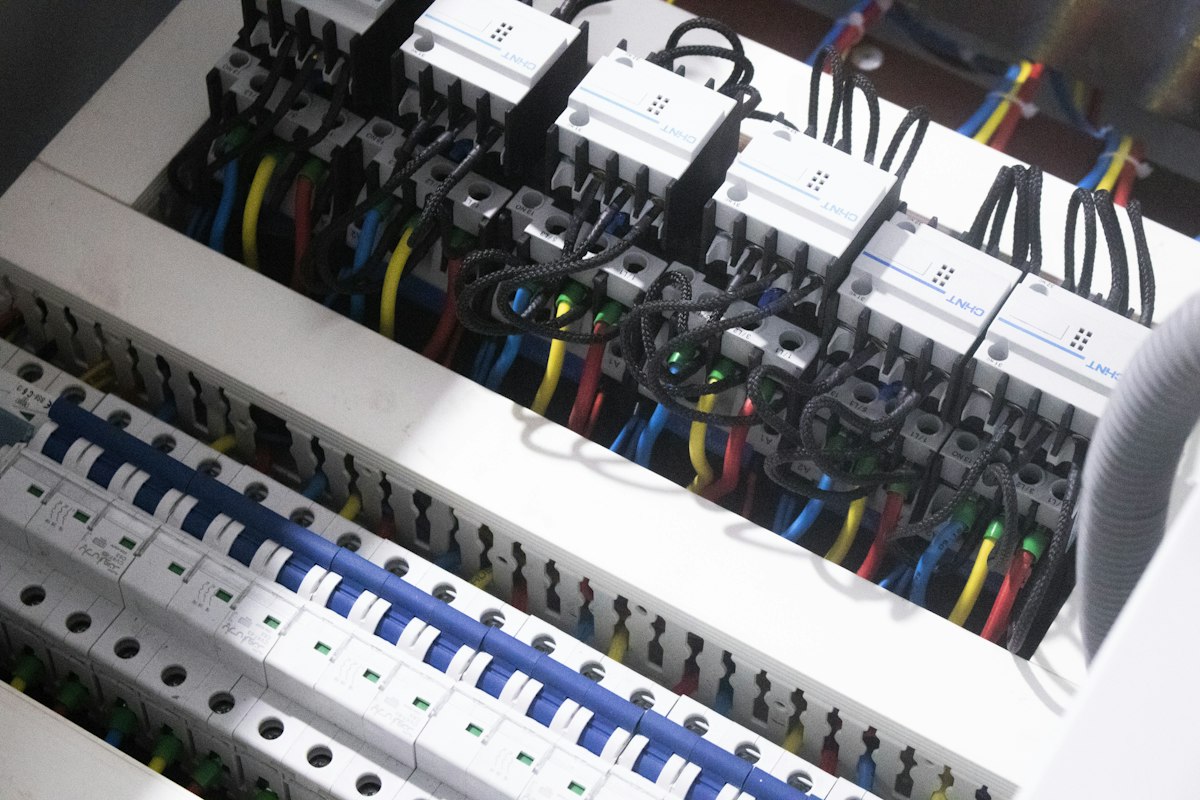
- Consumer units with old fuses or without an RCD.
- Installations with no earth connection, with sockets that lack the protective earth contact.
- Power cuts in communal areas or in a single home in the building, sometimes related to the individual supply line or the meter bank.
- In bars, shops and restaurants, protection devices tripping because kitchen, refrigeration and air-conditioning equipment is connected to lines that are undersized.
3. What to do step by step while the electrician is on the way
The rule is simple: do not handle anything that might be live.
- Unplug appliances only if the socket is dry and shows no visible damage. If there is damp, sparks or burn marks, keep away.
- If the RCD trips, unplug the appliances and reset it once only. If it trips again, do not keep trying: there is a fault that a professional needs to locate.
- Do not open the consumer unit, do not replace protection devices with higher-rated ones and do not use insulating tape to patch up cables.
- If there is water near sockets or the consumer unit, do not step on wet areas or touch anything electrical.
- If you see smoke or flames, leave the property and call 112. Do not use water to put out a fire of electrical origin.
- Make a note of what was running when the problem happened: it helps to diagnose the fault more quickly.
Warning signs that justify an urgent call:
- A smell of burning or hot plastic.
- Sparks, buzzing noises or black marks on sockets and the consumer unit.
- Electric shocks when touching taps, appliances or metal casings.
- Protection devices that trip repeatedly.
4. Communities and businesses: prevent problems before they become emergencies
In a residents' community, communal areas, the individual supply line and the meter cabinet require planned maintenance. An electrical installation inspection can detect ageing wiring, missing earthing or unsuitable protection before it causes a power cut or a risk to residents.
If your consumer unit is many years old, it is worth considering replacing it; we explain the warning signs in this article on when to replace your consumer unit. After any major modification, the authorised installer must process the corresponding electrical installation certificate (CIE).
For businesses, an electrical fault means stopping trading. Checking the lines serving the most demanding equipment and making sure the protection devices are correctly sized reduces downtime and risks. If you already have a problem, our urgent electrical repairs service acts immediately to restore power safely.
5. Frequently asked questions
- Can I switch the RCD back on if it trips? Once, after unplugging the appliances. If it trips again, stop trying and call an electrician.
- Is it normal for the power to trip in an old flat when I use several appliances? It is common, but it is not normal: it indicates an overload or an installation that needs inspection.
- Who is responsible for a fault on the staircase or at the meters? Communal areas are the responsibility of the community, which must contact an authorised installer through the administrator or the president.
- Is a certificate needed after a repair? It depends on the work carried out. If the installation is modified or extended, the authorised installer will tell you whether an electrical installation certificate (CIE) needs to be issued.
If you have a fault in Gràcia or anywhere in Barcelona, our 24-hour emergency electricians are available to help, day and night, including public holidays. Call us, tell us what is happening and we will advise you on how to act safely while we make our way to your home, community or business.